


How ADGM and MiCA Are Building the Legal Framework for On-Chain Equities


Regulated tokenized stocks are merging crypto and equities into compliant, unified global markets.
This article was originally published by FTT Team on Financial Tech Times.How ADGM and MiCA Are Building the Legal Framework for On-Chain EquitiesThe market is moving past the era of crypto-only experimentation. The next phase is being built around regulated, multi-asset platforms that can connect traditional equities with blockchain rails.
Tokenized securities are returning to mainstream exchanges backed by robust legal frameworks. Binance has launched US equities trading on June 4, 2026, offering eligible users access to over 7,000 stocks and ETFs. This rollout, soon followed by on-chain tokenized stocks, addresses growing demand for unified infrastructure where investors can manage digital and traditional assets together.
The Evolution of Tokenized Securities: Learning from 2021
Early iterations of tokenized equities operated in regulatory gray areas. The synthetic stock tokens of 2021 faced immediate scrutiny from regulatory bodies like the UK Financial Conduct Authority and Germany’s BaFin. These challenges led to the removal of such products from major platforms.
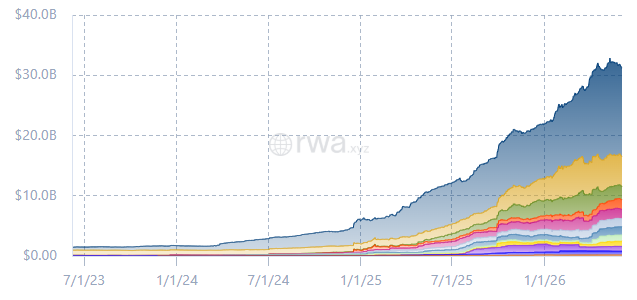
Today’s regulated tokenized securities differ fundamentally from those early models. They rely on established broker-dealers and strict 1:1 backing with shares held by regulated custodians. This maturation has restored confidence. The tokenized stock market total value is now approaching $31.15 billion, driven by compliant infrastructure rather than regulatory loopholes.
Binance introduces a clear pathway from equity ownership to bStocks, which are programmable, always-on tokenized assets. Binance Co-CEO Richard Teng noted that “Tokenization has the potential to reshape financial markets by giving users greater control, more flexibility, and ultimately more financial freedom.”
Compliance provides the necessary foundation for this flexibility. Teng added, “We see a significant opportunity to make financial assets more accessible, more useful, and more connected across traditional and digital markets.” Operating within defined legal parameters builds infrastructure that supports sustained market activity.
Establishing the ADGM Benchmark and SPV Custody
The regulatory architecture enabling products like bStocks relies on established financial centers. The Financial Services Regulatory Authority of the Abu Dhabi Global Market provides the framework for this multi-asset expansion. Nest Trading Limited operates as the ADGM broker-dealer handling the initial US equities offering.
For the tokenized component, BTech Holdings Limited acts as the issuer through a Special Purpose Vehicle structure. This setup ensures tokens are 1:1 backed by underlying equity held in a regulated custodian account, prioritizing investor protection. The ADGM recently approved tokenized securities trading on Binance’s Multilateral Trading Facility, marking an important regulatory milestone for on-chain equities within this framework.
Users can purchase fractional shares starting at $5 using stablecoins like USDC, lowering barriers for global participants who may lack access to US brokerages. The bStocks function as BEP-20 tokens on BNB Chain, tradeable continuously and compatible with decentralized finance. Instant conversion between stocks and bStocks occurs without fees, demonstrating how regulatory approval translates into practical utility.
Global Pathways: MiCA, VARA, and Geographic Constraints
The international regulatory landscape is creating clear, legal pathways for multi-asset platforms. Comprehensive frameworks are replacing the ambiguity of previous years. Europe’s MiCA regulation establishes uniform rules for digital asset service providers serving 445 million EU citizens. Title III and IV regulations took effect in mid-2024, with CASP compliance mandated by December 2024. Dubai’s VARA recently implemented Version 2.0 rulebooks to establish strict governance standards. These regional developments provide the clarity required for platforms, like Binance, serving over 310 million users globally to expand their offerings responsibly.
Geographic availability rules accompany this regulatory maturation. While offshore markets are expanding their access to traditional financial instruments, these tokenized equities remain unavailable to US users due to ongoing jurisdictional complexities. Platforms must employ strict geofencing to maintain compliance. These geographic constraints allow exchanges to offer zero commission trading and stablecoin-denominated purchases to eligible international markets while seeking to remain within applicable securities rules.
What This Means for Institutional Capital
Regulatory approval is the prerequisite for institutional adoption of tokenized assets. Family offices, asset managers, and hedge funds require legal certainty and clear custody rules before deploying capital into on-chain equities.
Institutions are increasingly viewing tokenized stocks as efficient collateral for borrowing and lending across decentralized protocols. Standard Chartered projects tokenized assets could reach $4 trillion by 2028. This projected scale relies entirely on institutions feeling secure enough to utilize on-chain markets for settlement.
Fully paid securities lending allows eligible users to earn passive income. This mimics traditional prime brokerage services but operates on blockchain infrastructure. Market resilience may increasingly depend on platforms that can support these institutional workflows with consistent liquidity.
A New Regulatory Reality
The convergence of crypto and equities is no longer a technological hurdle. It is a regulatory reality currently being built.
Connecting traditional finance with blockchain networks is not just a technical challenge. It also depends on regulation, custody and compliance frameworks strong enough to support real financial markets.
Regulated tokenized stocks point to a broader change in global market infrastructure. The future of finance is likely to be built on unified platforms where traditional assets and blockchain-based instruments can operate side by side.
